Showing posts with label India. Show all posts

Sunday, August 27, 2017

CELEBRATING 378 YEARS OF MADRAS


        Hello my dear readers from Chennai /Madras/!

         As you know I am an Armenian and almost 3 years I live in Chennai, India.

It's me: Ashkhen Khachatryan
            On 22 August every year is celebrated "Madras Day". The founding day of Madras is considered to be August 22, 1639.
            Here in Chennai /old name Madras/ we, Armenians have huge Armenian Heritage.
            The oldest tombstone of an Armenian found in Madras is dated 1663. The Stone was found, understandably near Little Mount and was inscribed with the name Coja David Margar.

Armenian church in Chennai on Armenian Street, Photo by Yura Sysoyeva
Friendship between Armenia and India has centuries history.
          Thomas Cana is said to be the first Armenian to have landed on the Malabar cost in 780 AD.        Long before a few Armenian traders had come to Agra during the Mugal Empire.
           The Armenian colony in India increased in size wealth and importance throughout the 17th centrury. they also entered Indian Trade in varying relationships to the East India company.
            The first Armenian settlement in Madras dates back to at least the 1600s.

Ocean
                   From where Armenians came to India?
             In the 17th Century , Armenia was devieded between Ottoman Empire and Persia.
             Today's Capital city Yerevan was part of Persia. In 1603 Shah Abbas 1st decided to deport Christian population from South Caucasus to Ispahan the new capital of Persia.
               500.000 Armenians were forced to leave their homeland , most of them from the city of Julfa. Only 4000 Armenians arrived Ispahan.
              In 1615, Abbas gave them an area in a suburb of Ispahan. Armenians named their neighbourhood "New Julfa".
              Armenian traders came Chennai from New Julfa.
              Among the Armenian traders Khwajah Petrus Voskan /Coja Petrus Voskan or Uscan Petrus Velijanyan, 1680-1751/ was one of the rich merchants came to Madras in 1724.

Coja Petrus Voskan

To be continued...

Friday, May 26, 2017

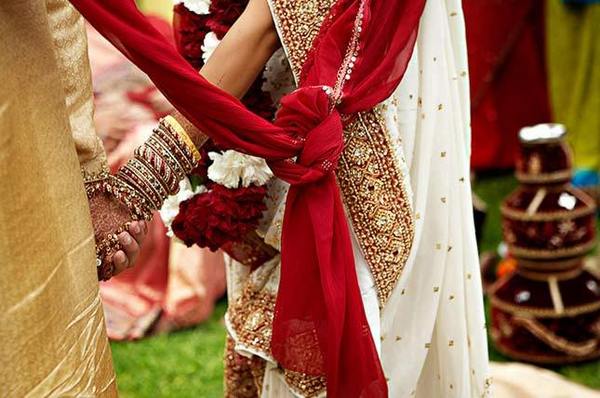
NORTH INDIAN TRADITIONAL WEDDING

     
 An Indian Hindu wedding is strictly observed according to the ancient cultural norms laid down in the Vedas. In the Indian society a wedding is not just the coming together of two people rather two souls. In fact, a wedding also brings two families closer, which thereafter share a bond of respect and affection. As a result, there are a number of traditions and customs associated with the Indian Hindu wedding ceremony. These traditions are the essence of the marital institution, thereby strengthening the significance, chastity and faith in the same.The following are some of the traditional wedding customs that make Indian weddings so special.
                                             Sagai

Sagai is an Indian wedding ritual that precedes the wedding. It is nothing but the engagement ceremony where the couple exchanges ringsand the date for the wedding is announced to the guests.

Mangalsutra

In the Hindu tradition, rather than exchanging wedding rings, the groom ties a mangalsultra around the bride’s neck. The Mangalsultra is a necklace with two gold pendants. The groom ties the necklace with three knots to signify a strong bonding for 100 years.

Haldi
Haldi ceremony is an Indian wedding ritual that takes place a couple of days before the wedding, in the respective homes of the bride and groom-to-be. Haldi or turmeric is auspicious in Hindu texts and is said to ward off the evil eye. During this particular Indian wedding ritual, a fragrant paste of turmeric with rose water is applied on the face, hands and legs of the couple-to-be. It also works wonders on the skin, fighting blemishes and making it glow!

Sangeet

The sangeet ceremony is not an Indian wedding ritual of a religious significance per se, but is more of a get together meant for fun.   A ladies-only event, the sangeet ceremony involves the women of the family getting together and making merry two nights before the wedding day. It is more of a stress-buster, with lots of music, dancing and great food.

Mehendi

The Mehendi ceremony takes place just one day before the actual wedding. Only women attend this event in which intricate patters are drawn on their hands and feet with mehendi (also known as henna). During this Indian wedding ritual, elaborate henna designs are applied on the hands and feet of the bride amidst music, dance and general merriment. Sometimes, the mehendi and the sangeet ceremonies are held together for convenience. 

Baraat and Tika Ceremony


  On the day of the wedding, the bridegroom and his family arrive at the venue in a formal procession called the baraat. The groom arrives on a horse or a slow moving convertible car with the party surrounding him dancing to beats. They are welcomed at the entrance by the bride’s family with a traditional tika on the forehead.

Jai Mala or Var Mala Ceremony 


       The bride arrives at the mandap, flanked by family after the arrival of the groom. They exchange garlands and are made to sit next to each other.This is the most important Indian wedding ritual which is similar to ‘giving away the bride’. 

Kanyadaan 


The bride’s father gives her hand to her husband-to-be and pours water over it. From that moment on, the girl is said to belong to the husband and his family.


Pheras


The groom ties the mangalsutra or the holy necklace around the bride’s neck and applies sindoor on her forehead, signifying that they are married. Just as the western weddings have ‘vows’ or promises, Indian wedding rituals include the ‘Phera ceremony’ where in the couple circumambulate around the holy fire and make promises to each other. Once 7 rounds are completed, the couple is said to be wed to each other.
Vidaai


It is a very emotional moment, where the parents of the bride tearfully wed her adieu. She symbolically moves into her new phase by throwing some rice or coins towards her parents house, without turning back.